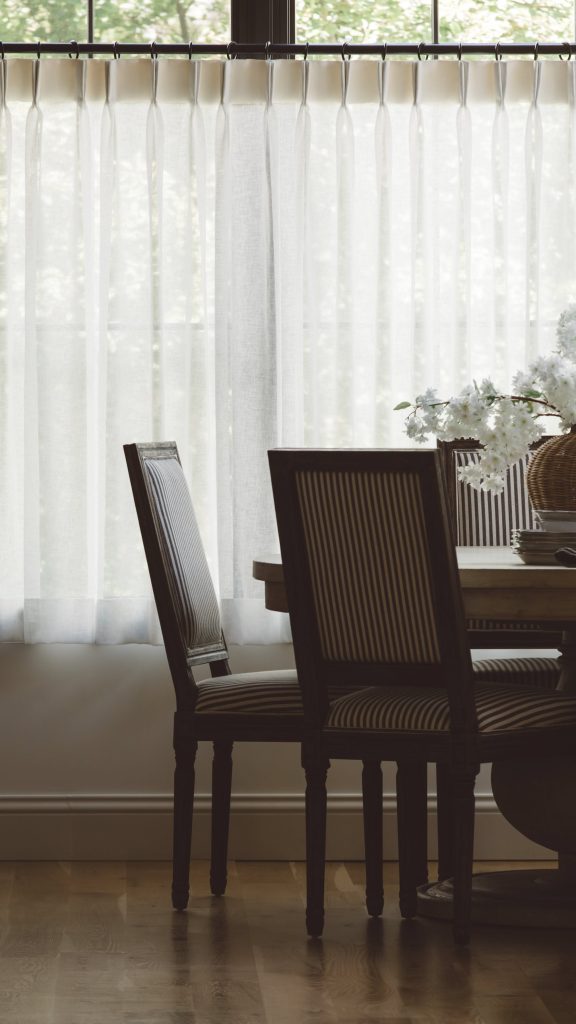
Natural-looking textiles have become an important part of contemporary interior design. Soft textures, subtle irregularities and muted natural colors can make a room feel warmer and more comfortable without creating a heavy decorative effect.
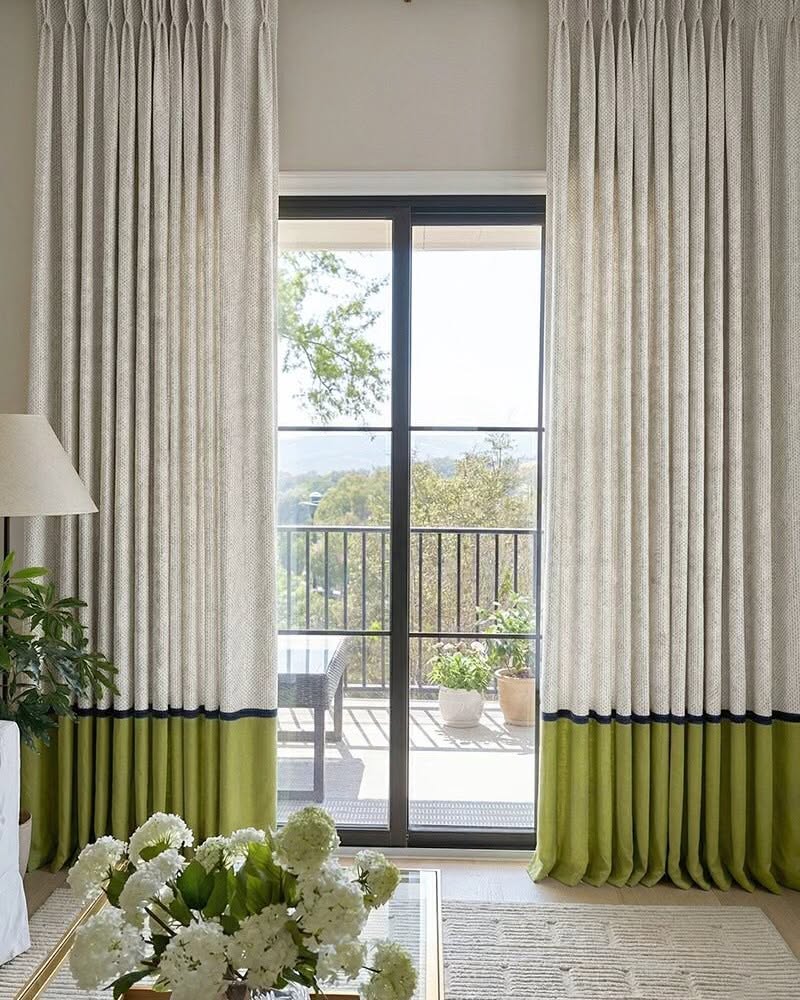
But choosing a curtain fabric is not only about appearance. For distributors, curtain manufacturers, retailers and interior designers, practical factors such as width, drape, durability, maintenance, MOQ and color availability are equally important.
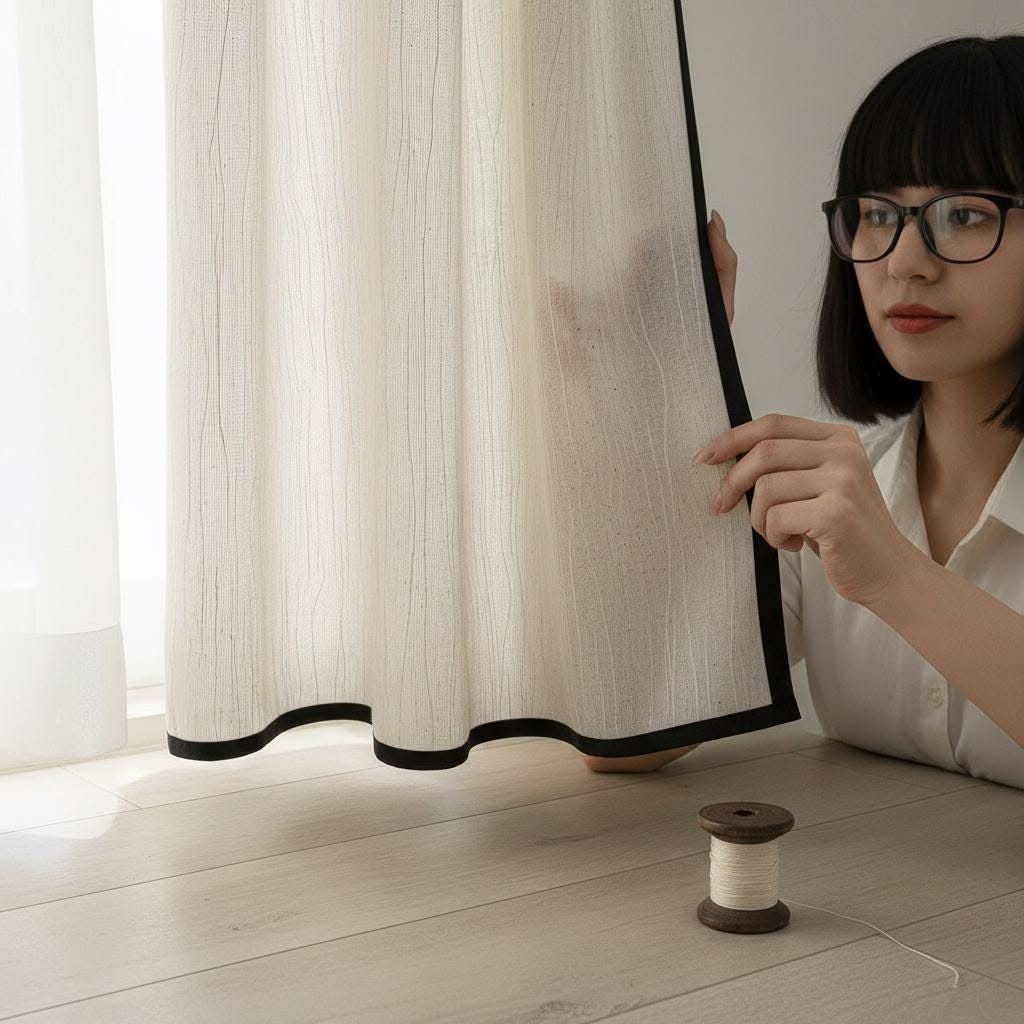
This is where linen-look polyester curtain fabric can offer an interesting alternative to traditional linen.
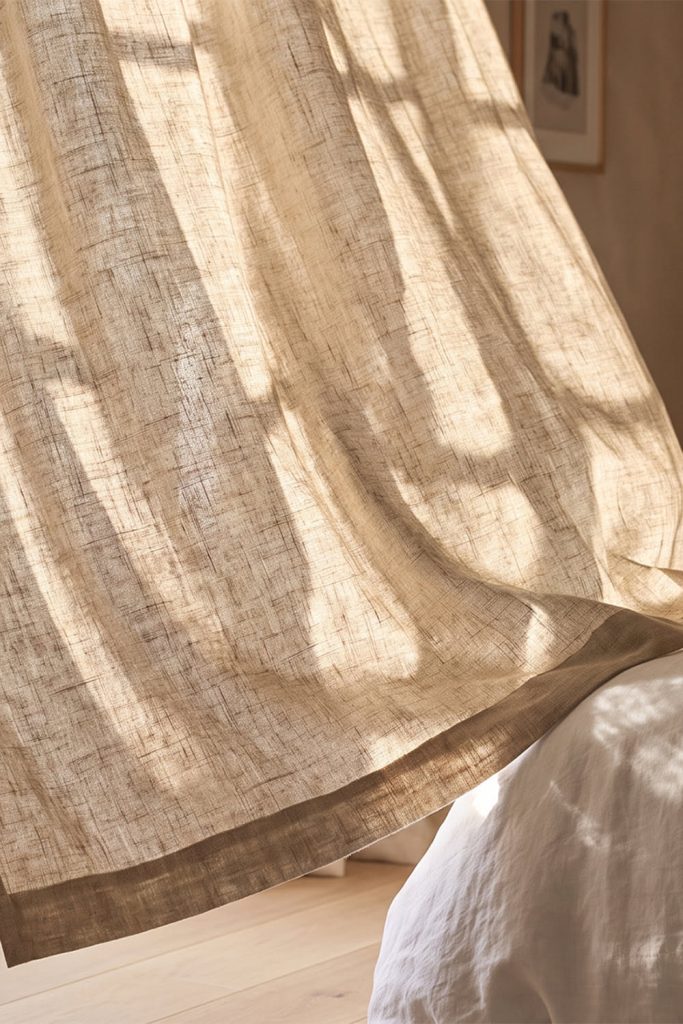
What Makes a Curtain Fabric Look Natural?
A natural-looking curtain fabric is not necessarily made from natural fibers.
The appearance is usually created through a combination of:
- Yarn characteristics
- Weave structure
- Surface texture
- Color variation
- Fabric weight
- Finishing
- Drape
A fabric may therefore have a linen-like appearance while using polyester or a polyester blend.
Linen-look vs. real linen
Real linen is valued for its distinctive natural texture and character. However, it can also have characteristics that may not suit every commercial curtain project.
Linen-look polyester is designed to reproduce some of the visual qualities associated with linen while offering the practical characteristics of polyester.
For B2B buyers, the important question is therefore not simply “Is it linen?”, but:
Does the fabric provide the right combination of appearance, performance, price and production practicality for the intended project?
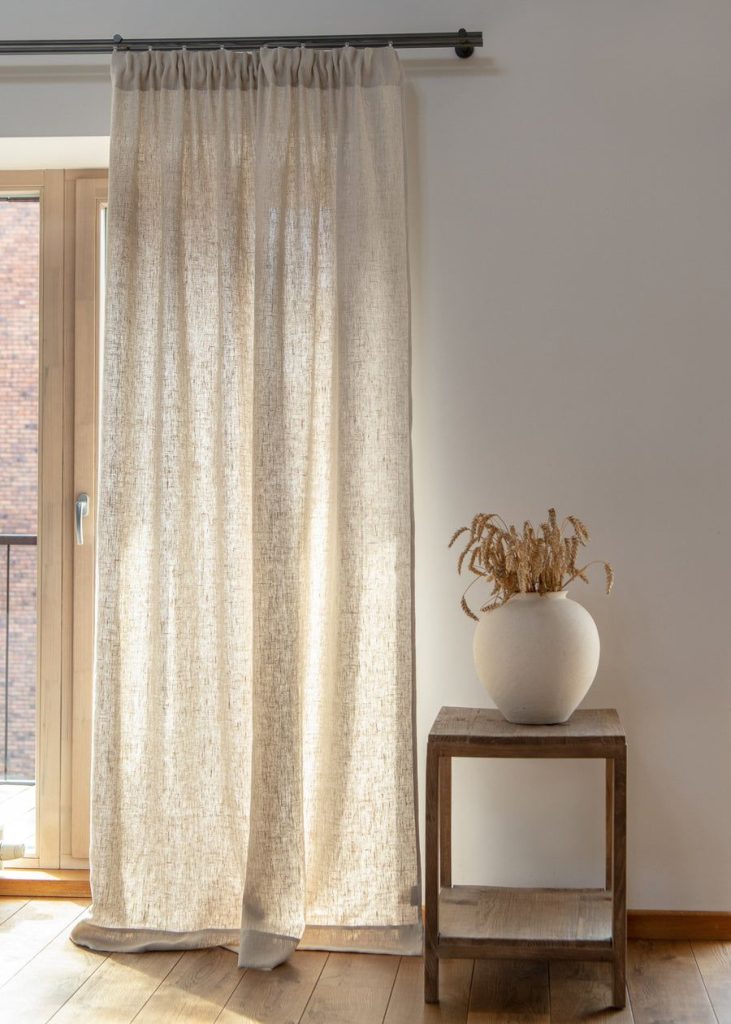
Why Is Linen-Look Curtain Fabric Popular?
1. It Creates a Relaxed, Natural Interior
Natural-looking curtains work particularly well with contemporary interior styles.
They can complement:
- Light wood
- Stone and concrete
- Neutral wall colors
- Natural furniture
- Minimalist interiors
- Scandinavian-inspired spaces
- Japandi-style interiors
- Soft contemporary interiors
Compared with highly shiny or strongly patterned curtain fabrics, a linen-look surface can provide visual texture without dominating the room.
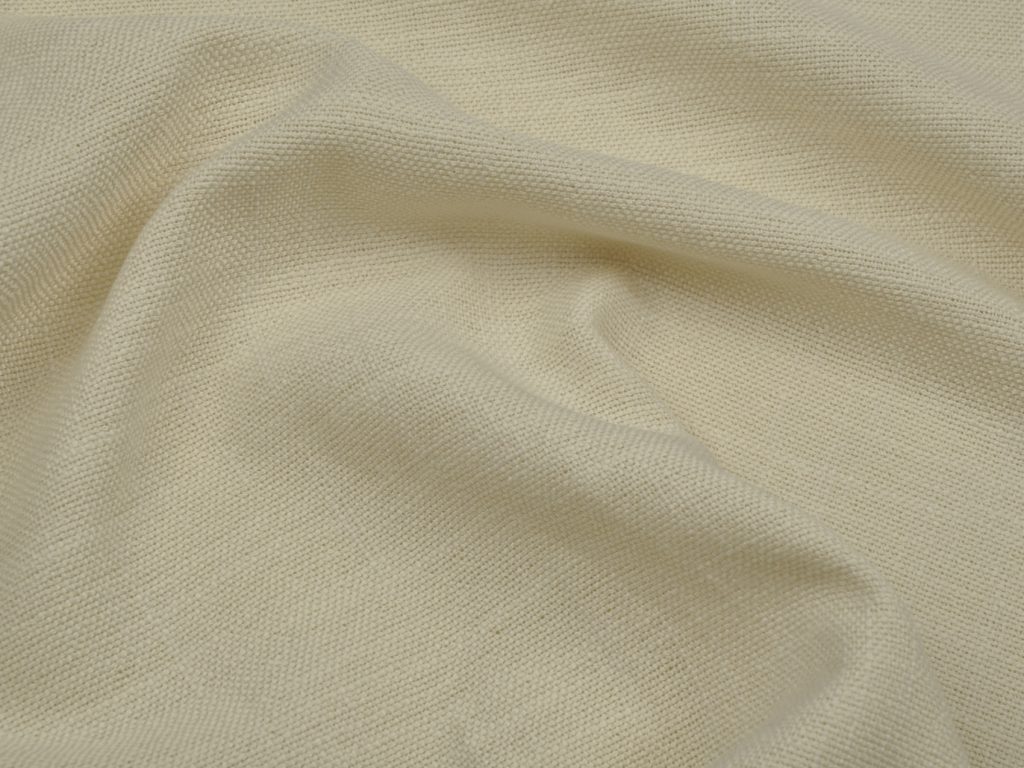
2. The Texture Adds Depth Without a Strong Pattern
One of the advantages of textured curtain fabric is that the visual interest comes from the construction of the fabric itself.
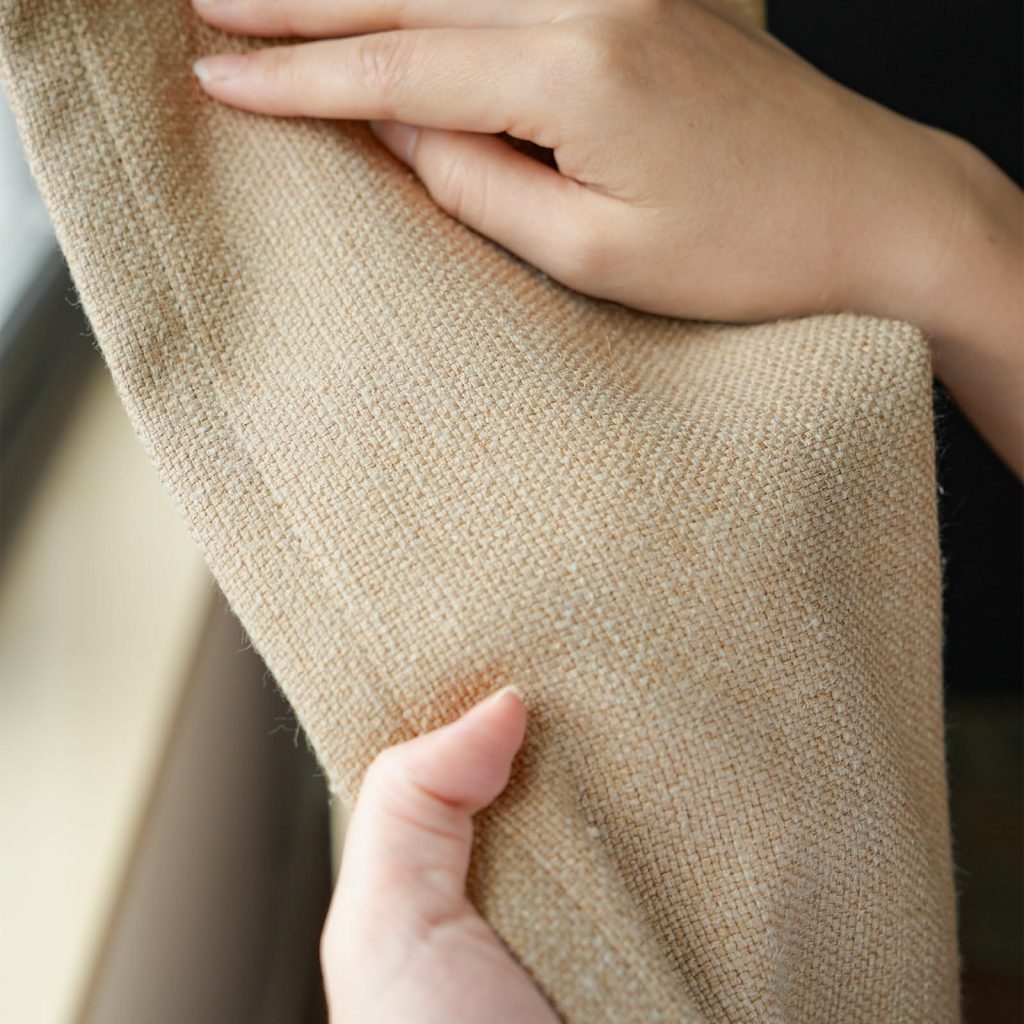
A plain woven fabric with subtle yarn variation can look simple from a distance while revealing more texture when viewed closely.
This makes natural-looking fabrics useful for projects where designers want the curtains to feel sophisticated but understated.
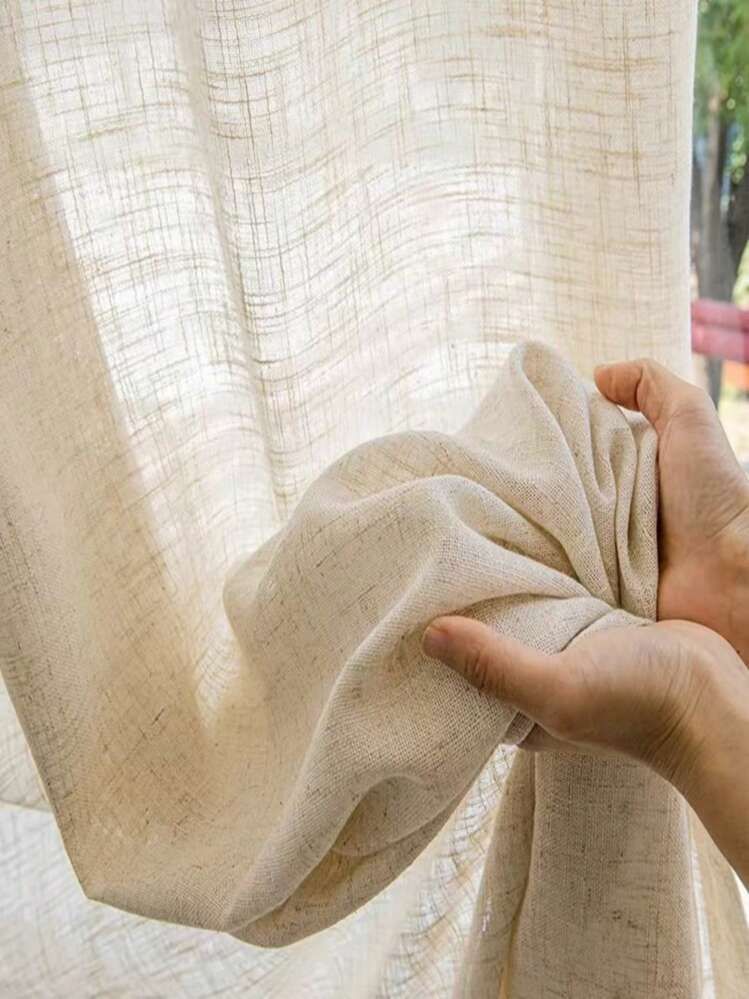
3. Polyester Can Be Practical for Commercial Curtain Production
Polyester is widely used in curtain manufacturing because it can provide a practical combination of appearance, handling and production consistency.
For B2B buyers, this can be particularly relevant when fabric is being used for:
- Ready-made curtains
- Made-to-measure curtains
- Hotel and hospitality projects
- Residential developments
- Retail curtain collections
- Large-scale interior projects
A linen-look polyester fabric can provide the desired natural appearance while fitting into a production system designed around synthetic textile materials.
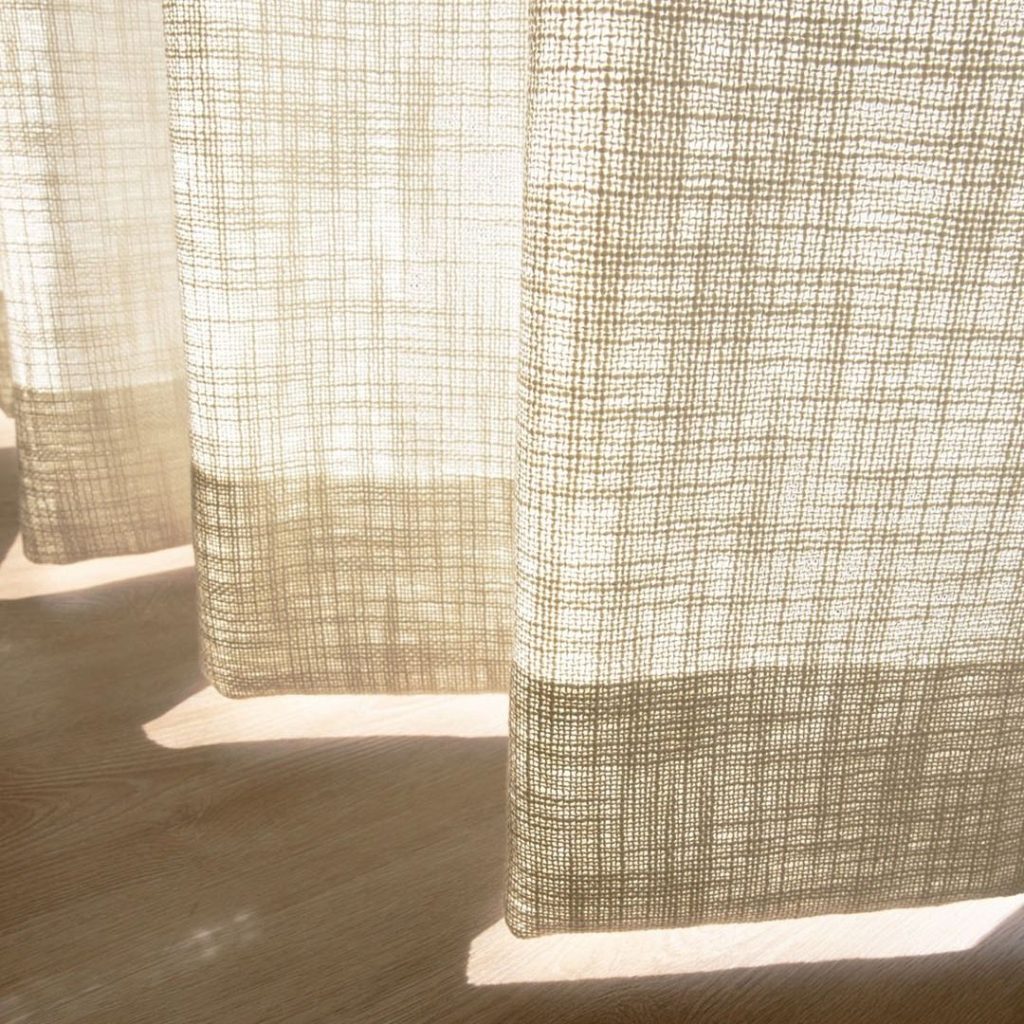
Why Does Fabric Width Matter for Curtain Buyers?
Fabric width is often overlooked when comparing curtain fabrics.
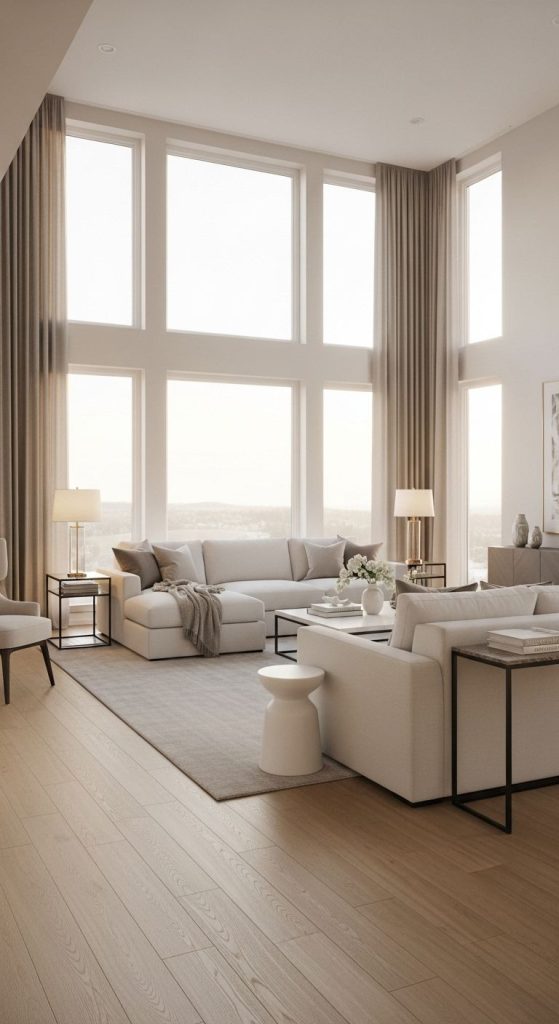
For large windows, high ceilings and floor-to-ceiling curtains, wide-width fabric can significantly affect how a curtain is manufactured and installed.
Taeren Fabric produces curtain fabrics in 300 cm and 320 cm widths for applications where wide-width construction is useful.
300 cm and 320 cm curtain fabrics
Wide-width curtain fabric can be particularly interesting for:
- Large residential windows
- Floor-to-ceiling curtains
- Hotels
- Commercial interiors
- Hospitality projects
- Projects where reducing horizontal joins is desirable
When evaluating a wide fabric, buyers should confirm the actual usable width, fabric construction, pattern direction and whether the fabric is suitable for the intended curtain-making method.
Width should always be considered together with the required finished curtain height.
What Should B2B Buyers Check Before Ordering?
Choosing a natural-looking curtain fabric requires more than requesting a color card.
Here are several practical questions worth asking your supplier.
1. What is the fabric composition?
Check whether the fabric is:
- 100% polyester
- Polyester blend
- Linen/polyester blend
- Another fiber combination
Composition affects the fabric’s appearance, handfeel, care requirements and production characteristics.
2. What is the usable width?
Do not look only at the nominal width.
Ask for the usable width and confirm whether the stated width includes selvedges.
For large curtain projects, this detail can affect cutting and production planning.
3. How does the fabric drape?
Drape is one of the most important characteristics of curtain fabric.
A fabric may look attractive in a swatch but behave differently when made into a full-height curtain.
For this reason, buyers should request a larger sample or finished curtain sample when evaluating an important collection.

4. Is the surface texture consistent?
Natural-looking fabrics often have visual yarn variation or a textured construction.
Ask the supplier how consistent the appearance is between production lots and whether there may be differences between sample and bulk production.
5. What is the MOQ?
MOQ can have a major impact on product development.
For distributors and curtain retailers developing multiple colors, lower MOQ options can make it easier to test a new collection before committing to larger quantities.
6. Are custom colors available?
If you are developing a private collection, ask about:
- Custom colors
- Yarn-dyed options
- Color matching
- Sampling procedure
- MOQ for custom production
- Lead time
These details should be confirmed before placing a development order.
Linen-Look Polyester or Real Linen: Which Should You Choose?
There is no universal answer because the appropriate fabric depends on the project.
| Consideration | Linen | Linen-look polyester |
|---|---|---|
| Natural fiber content | Natural | Usually synthetic |
| Visual appearance | Naturally textured | Can reproduce a linen-like appearance |
| Handfeel | Characteristic natural hand | Can be engineered for a softer or smoother hand |
| Drape | Depends on construction and weight | Depends on construction and finishing |
| Maintenance | Requires consideration of linen characteristics | Often chosen for practical commercial applications |
| Color consistency | Depends on construction and dyeing | Can offer consistent production for commercial collections |
| Large-scale projects | Project dependent | Often considered for commercial curtain production |
| Collection development | Depends on supplier | Can offer broad color and construction options |
The key point is that natural appearance and natural fiber content are not the same thing.
For some projects, genuine linen may be essential. For others, a well-designed linen-look polyester fabric may provide a more practical balance between appearance and production requirements.
Natural-Looking Curtain Fabric for European Interiors
European interior projects often place strong emphasis on understated textures, neutral colors and materials that create a comfortable atmosphere.
This makes natural-looking curtain fabrics suitable for a wide range of applications.
For distributors and retailers, a collection can include several related constructions rather than relying on a single fabric.
For example:
- Plain woven curtain fabrics for clean, versatile interiors
- Linen-look fabrics for a natural textile appearance
- Textured upholstery fabrics for coordinated furniture applications
- Blackout fabrics where light control and privacy are required
- Cushion fabrics for coordinating soft furnishings
A coordinated textile collection can make it easier for designers and curtain manufacturers to specify several products within the same interior project.
Taeren Fabric’s Natural-Looking Curtain Fabric Range
Taeren Fabric develops and manufactures fabrics for curtain, upholstery, cushion and table textile applications.
Its curtain collection includes linen-look polyester fabrics, plain woven fabrics, textured fabrics and blackout fabrics, including wide-width options.
For buyers looking for a natural textile appearance, the linen-look range focuses on combining:
- Natural-looking surface textures
- Soft handfeel
- Good curtain drape
- Practical polyester construction
- 300 cm and 320 cm width options
- Flexible color development
- Low MOQ options for selected products
For projects requiring a different level of light control, Taeren also offers blackout fabric solutions with linen-look surfaces and wide-width constructions.
Buyers should confirm the specific composition, width, finishing, MOQ and available colors for each article before ordering.
How to Select the Right Natural-Looking Curtain Fabric
A simple purchasing process can help avoid problems later.
Step 1: Define the application
First determine whether the fabric is intended for:
- Residential curtains
- Hotel curtains
- Contract interiors
- Ready-made curtains
- Made-to-measure curtains
- Sheer or decorative curtains
- Blackout curtains
Step 2: Determine the required width
Measure the finished curtain height and consider the production method.
If the project requires tall curtains, inve
Leave a Reply